Techtiz Corporate Website
Shipped Jun 2026
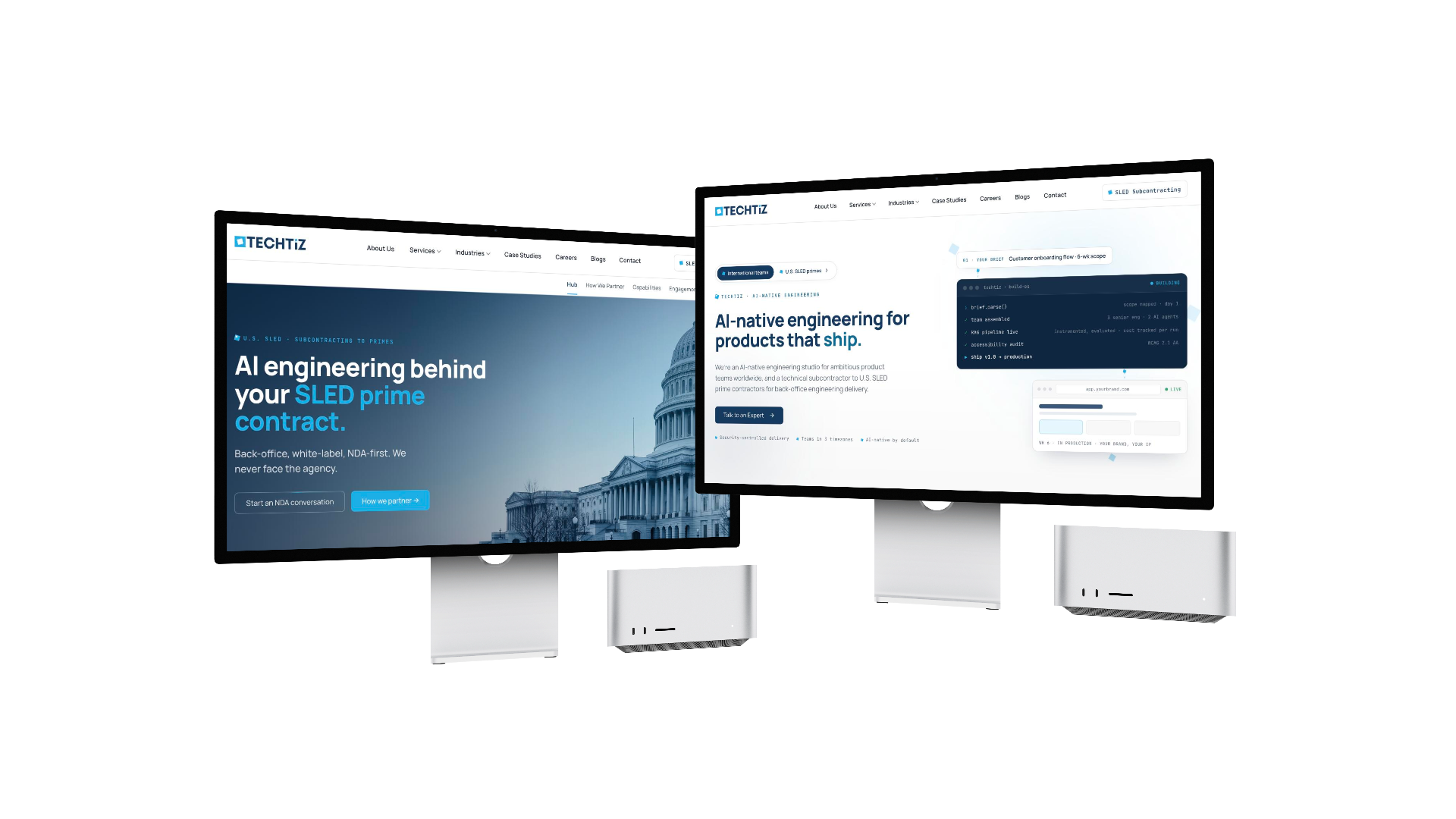
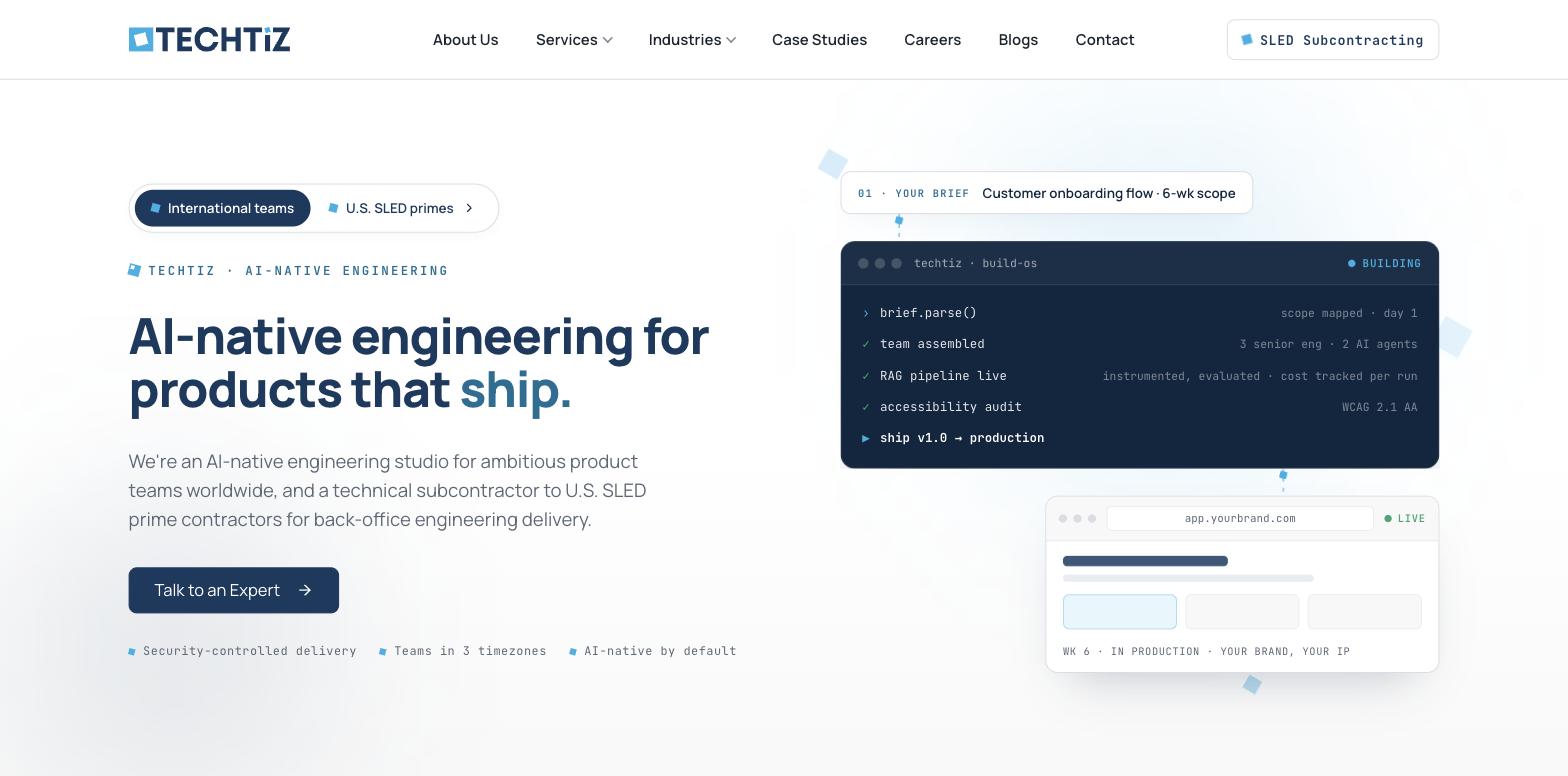
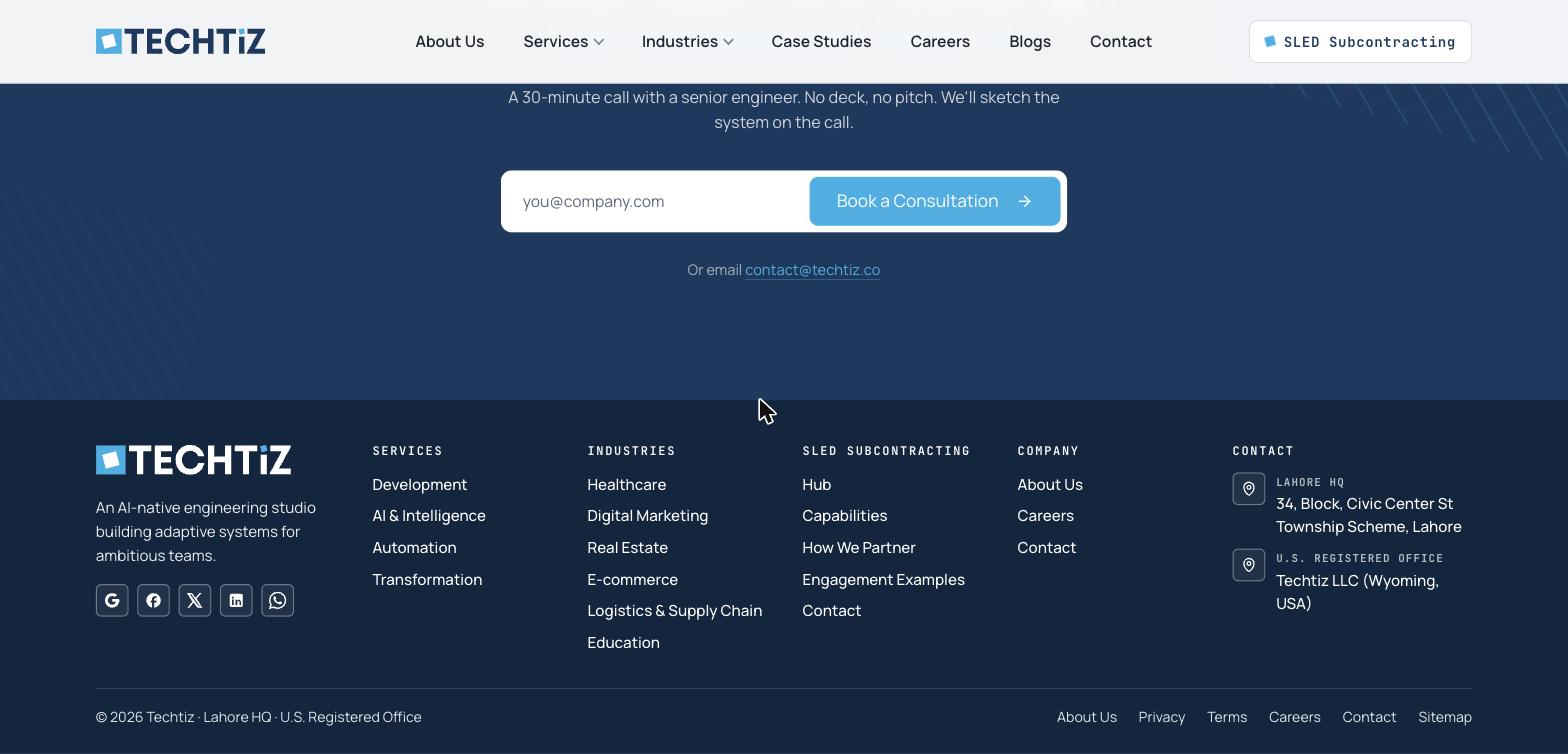
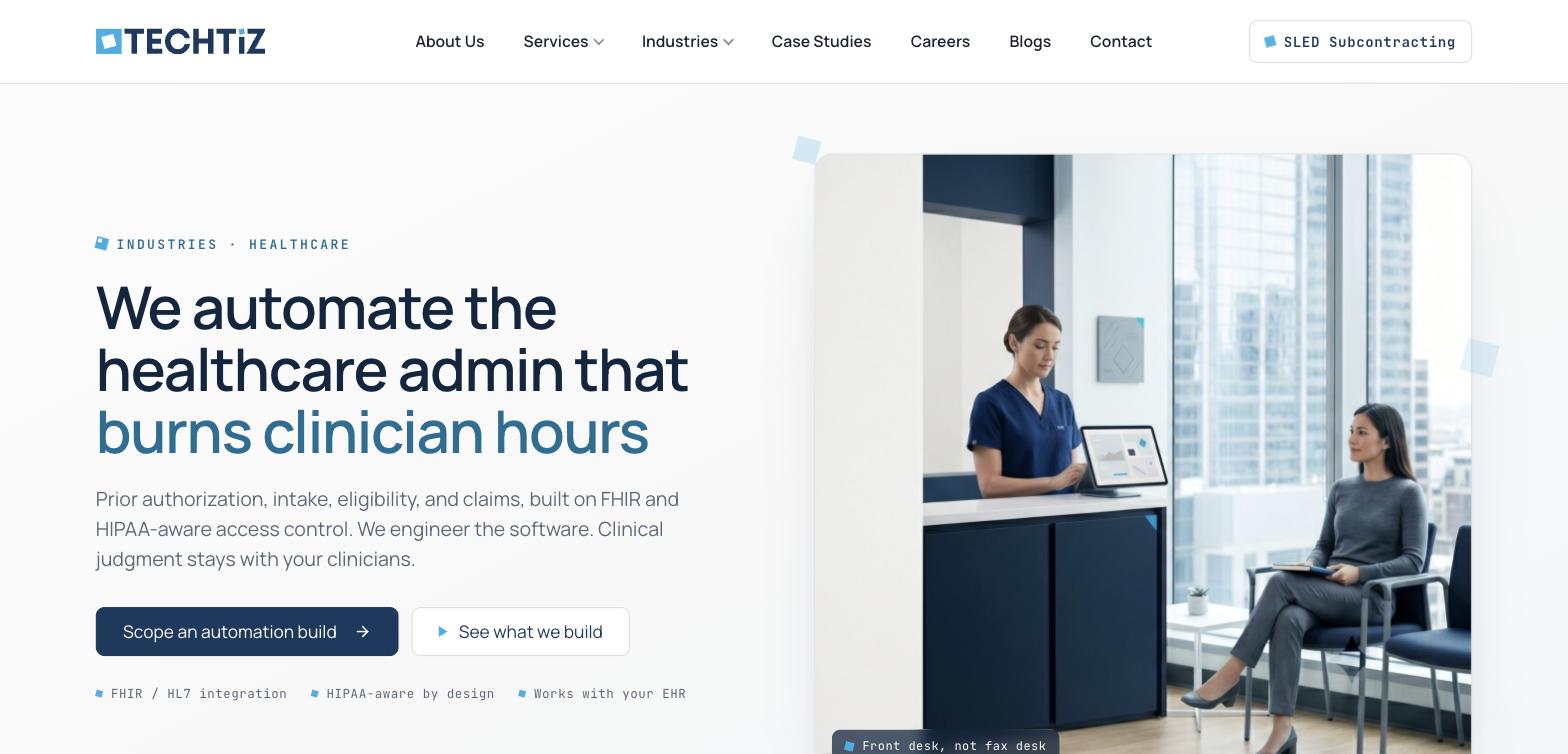
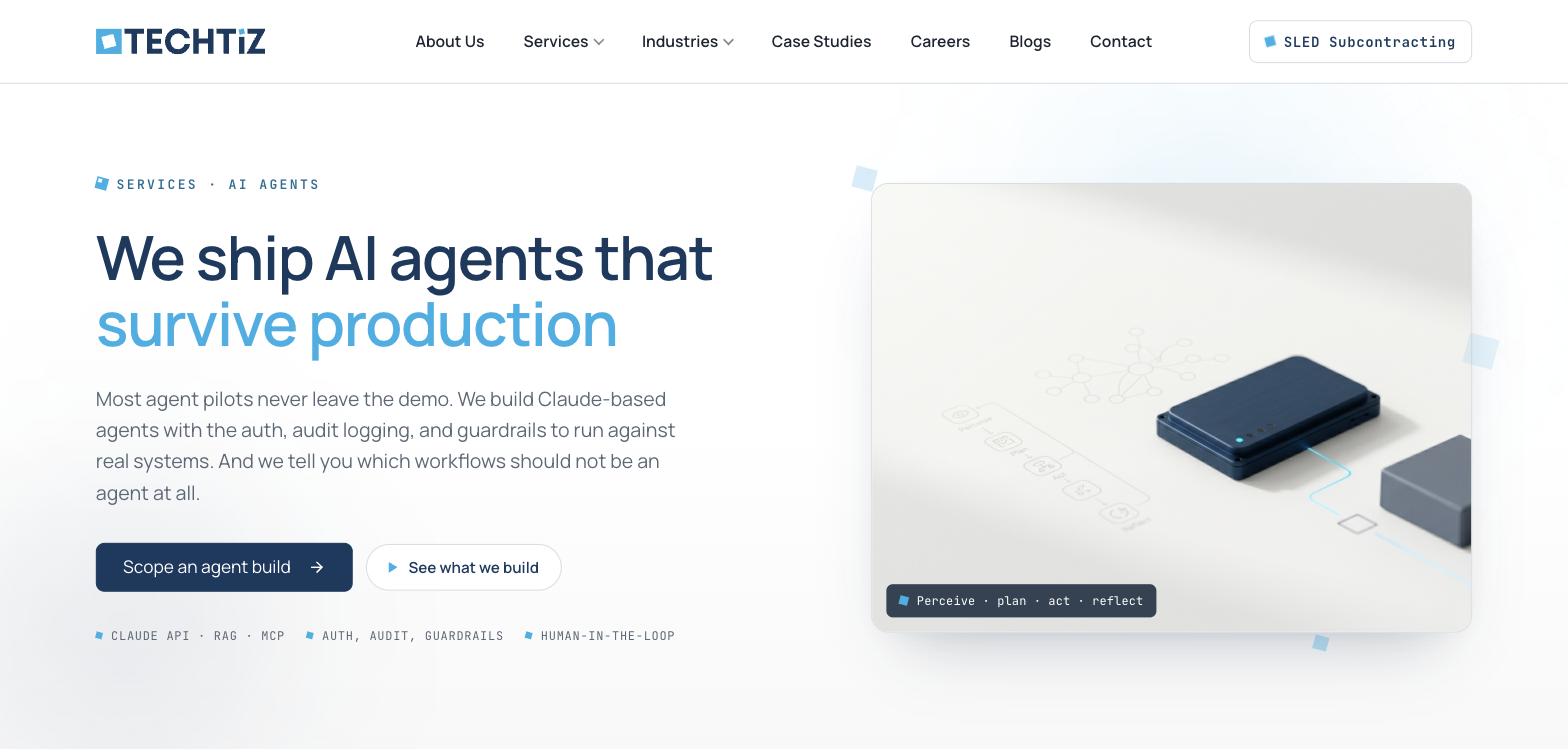
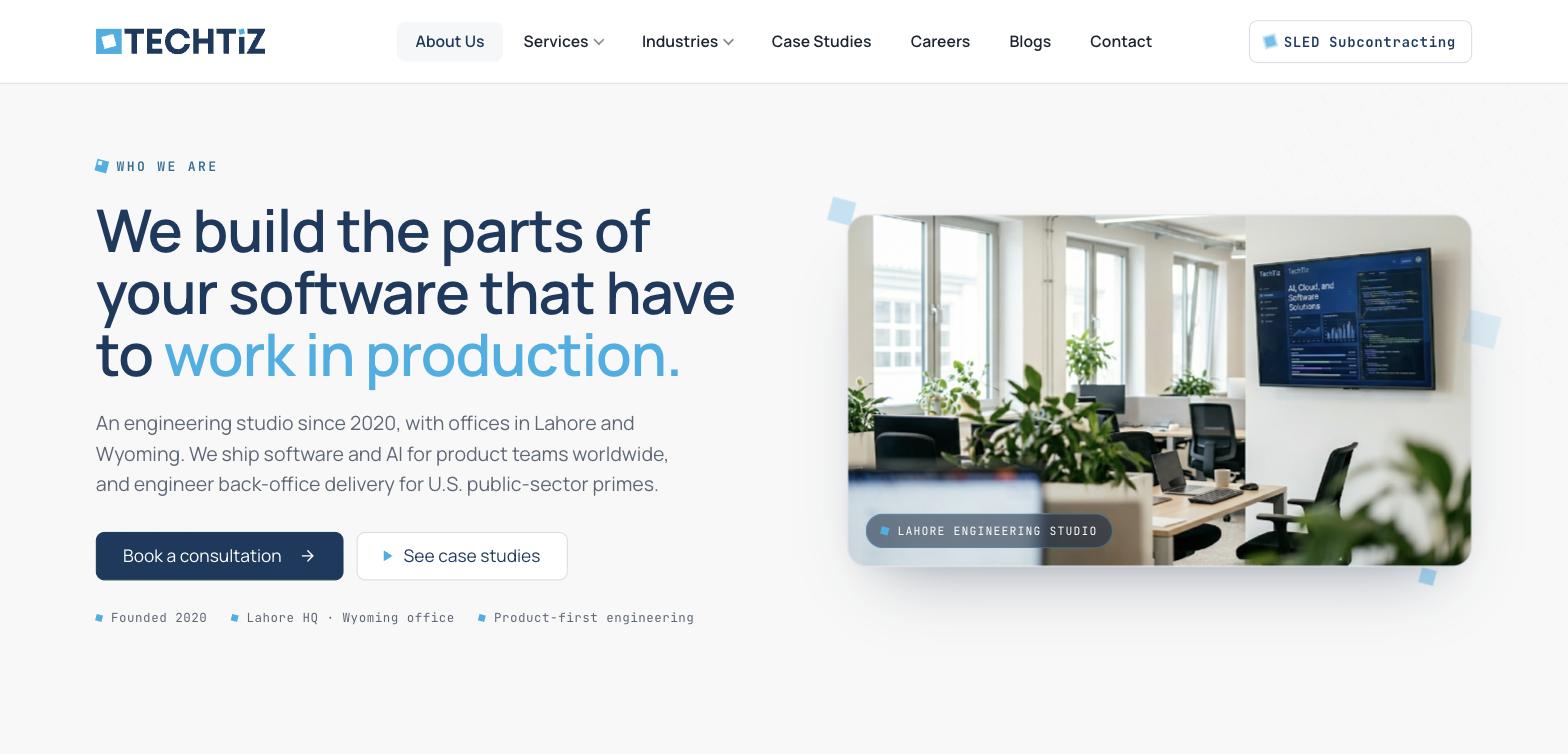
Techtiz's marketing site is a static Astro build deployed on Vercel, with most pages statically generated and a handful of dynamic pieces — the contact API, blog post pages — served as server-rendered routes. Its Services and Industries sections follow a two-tier pattern: a catch-all dynamic route renders generic pages from shared data files, while high-traffic pages like healthcare, real estate, e-commerce, logistics, AI agents, and custom software get their own dedicated directories with custom components, copy, and stylesheets.
Built With
 Astro
Astro  TypeScript
  JavaScript
  HTML
HTML  CSS
CSS  Tailwind CSS
  Vite
Vite  Node.js
  Vercel
  Nodemailer
  PDFKit AOS
  Lucide
  Microsoft Clarity
 Project Overview
Techtiz's marketing site is a static Astro build deployed on Vercel, with most pages statically generated and a handful of dynamic pieces — the contact API, blog post pages — served as server-rendered routes. Its Services and Industries sections follow a two-tier pattern: a catch-all dynamic route renders generic pages from shared data files, while high-traffic pages like healthcare, real estate, e-commerce, logistics, AI agents, and custom software get their own dedicated directories with custom components, copy, and stylesheets.
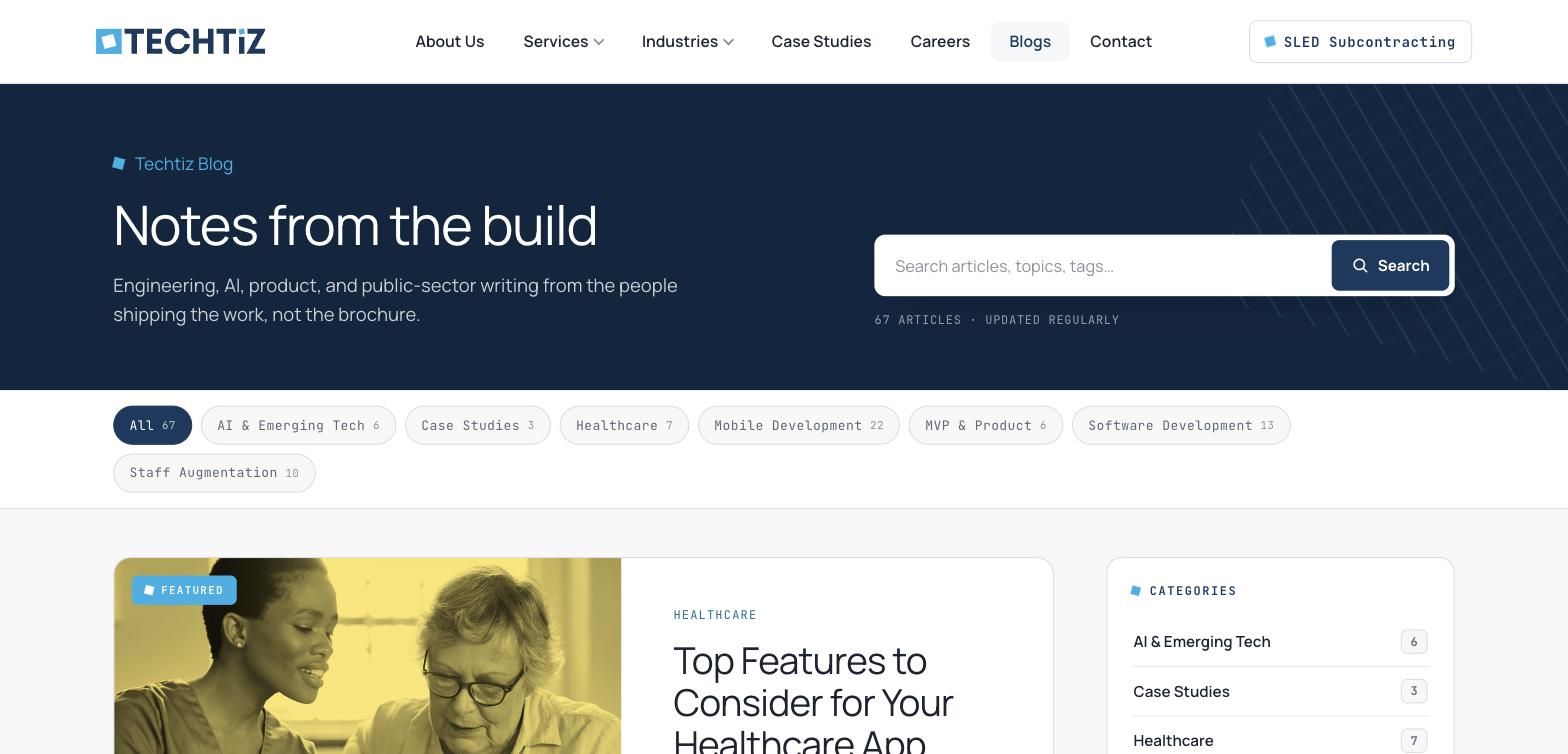
A separate US-SLED section targets government subcontracting audiences — state, local, and education primes — with its own trust signals (SAM/UEI, NIST 800-171, ISO targets) and compliance-conscious messaging, kept distinct from the commercial pages. The blog is a headless WordPress frontend: content is authored externally on blog.techtiz.co and pulled in via the WordPress REST API, with client-side filtering, sorting, and pagination, plus a server-side proxy for guest comments.
The site is built with Astro and TypeScript, styled with Tailwind CSS v4 against a custom design-token system (navy/cyan brand palette, custom fonts), with AOS driving scroll animations. Interactive widgets — nav menus, forms, carousels — are plain JavaScript loaded per page rather than framework islands. SEO runs through shared layout components that inject Schema.org JSON-LD and page-level metadata, alongside an IndexNow integration for fast search-engine reindexing; contact and careers forms send mail through Nodemailer with reCAPTCHA, and PDFKit generates capability-statement PDFs for the SLED flow.



- Challenge
- Techtiz needed a marketing site spanning many verticals — services, industries, a separate government-subcontracting audience, and a blog — while migrating away from a legacy static HTML/CSS/JS site. The build had to support SEO-heavy, JSON-LD-rich pages at scale, avoid duplicating markup across dozens of near-identical service/industry pages, keep a completely separate tone and trust-signal set for the SLED (government) audience without cross-contaminating commercial pages, and integrate a headless WordPress blog without triggering full-site rebuilds on every post edit.
- Solution
- Built the site in Astro for static-first rendering with selective server rendering only where needed — contact/API routes, blog post pages — paired with a "constants-first" architecture where page copy, SEO metadata, and JSON-LD live in typed TypeScript files separate from components. For the repetitive verticals (services, industries), used a two-tier system: a generic catch-all route for most slugs, and hand-built dedicated directories for priority pages that needed custom design. SLED pages got their own layout and navigation, entirely isolated from the commercial site. Wired the blog to WordPress's REST API with client-side fetching and filtering so new posts appear without a redeploy, and added a server-side comment proxy so WordPress credentials are never exposed. Styling runs on Tailwind v4, with a documented set of Safari-specific CSS fixes for animation and overflow issues.
- Impact
- The result is a maintainable, SEO-optimized site where new service or industry pages can be added by following a documented, repeatable pattern rather than one-off custom work, content editors can publish blog posts without needing a code deploy, and the government-focused SLED funnel stays compliant and message-safe as a fully separate path. Also documented a set of cross-browser "gotchas" — iOS Safari clipping bugs, Tailwind v4 range-query fallbacks, mobile header behavior — as part of ongoing work to harden cross-browser and cross-device reliability.
Frequently Asked Questions
Prospective clients across very different audiences — commercial buyers evaluating services by industry, and government procurement teams vetting SLED subcontractors — had no single site that could serve each its own relevant, trustworthy information without diluting the other, and without being slow or invisible to search engines.
Techtiz Corporate Website was built with Astro, TypeScript, JavaScript, HTML, CSS, Tailwind CSS, Vite, Node.js, Vercel, Nodemailer, PDFKit, AOS, Lucide, Microsoft Clarity.
This was built as commercial/client work, so the source code isn't publicly available. Get in touch to discuss the implementation.
No — the automation is scoped to technical structure and data formatting (schema, canonicalization, crawl rules), not to mass-producing thin or spammy text.
By making content highly structured and fact-backed, supported by solid technical entity management and schema markup so AI systems can parse and trust it.
Typically a combination of crawl-budget waste from faceted/filter navigation plus pages silently returning server errors.
Core Web Vitals — specifically getting Largest Contentful Paint under 2.5 seconds.
Yes, that's the real danger — so the automation stays limited to structure/schema/canonicals while human review governs actual content quality to satisfy Google's E-E-A-T standards.
Available for work
Got a project like this
in mind?
Let's talk about what you're building and how I can help ship it.